For most of the last decade, wellness moved fast. A new supplement every few months. A new device, a new app, a new acronym. Most of it cycled in and cycled out. Then something different happened.
Breathwork stopped being a niche thing.
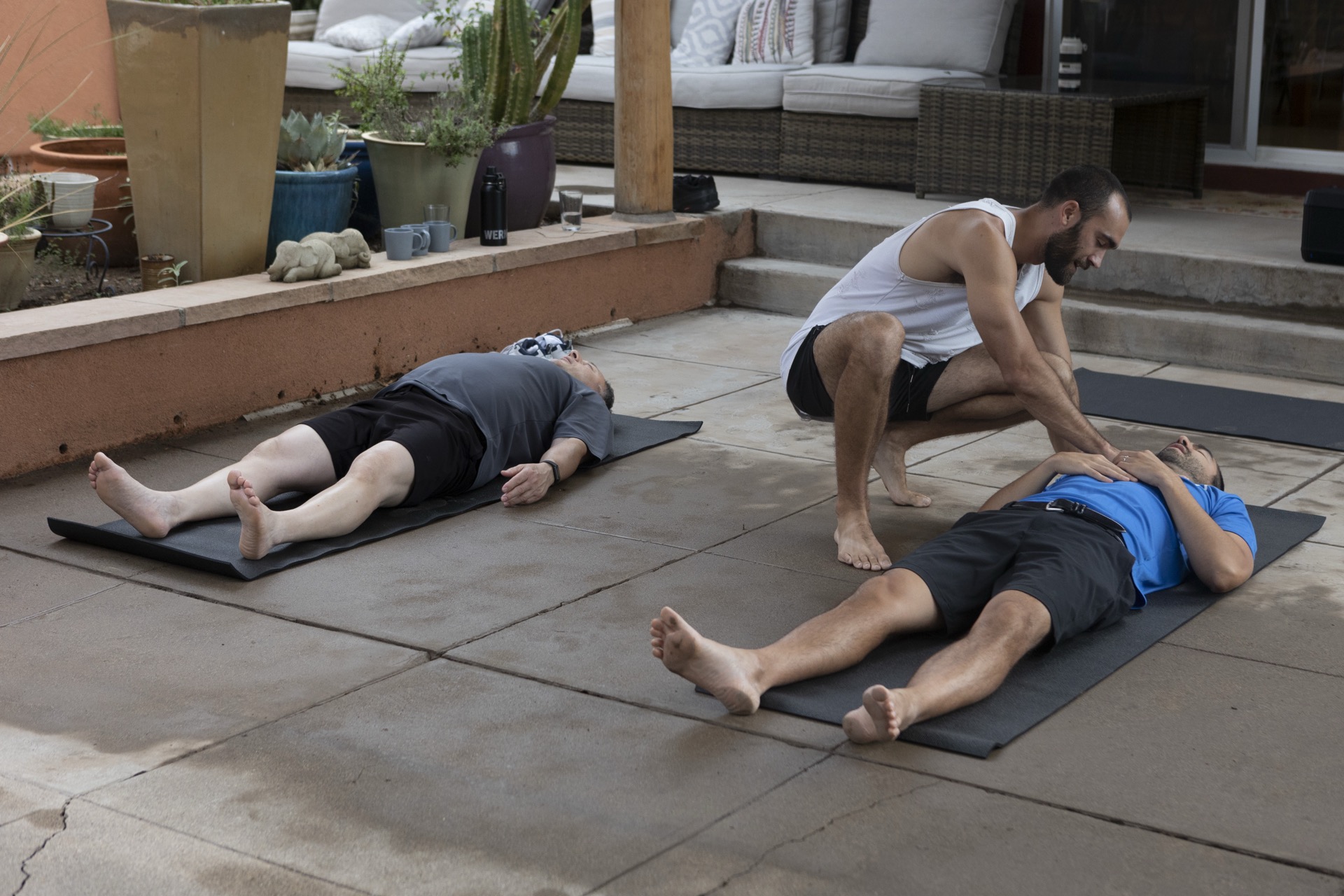
It started showing up in NFL training camps and hospital anxiety clinics. On bestseller lists and in primetime podcasts. In military special operations units that had used it quietly for years, and in suburban living rooms where people had never heard the word before 2021. The same practice, arriving from different directions, at the same moment.
That is not how fads spread. Fads come from the top down, pushed by marketing. This came from the ground up, pulled by need. The question worth asking is: why now, and why this?
The nervous system moment we are all living in
The years around 2020 produced something that crossed every demographic: a spike in chronic stress, burnout, and what researchers call nervous system dysregulation. People who had spent years managing life with productivity systems, calendars, and sheer willpower found those tools suddenly insufficient. Something physical was failing, and the cognitive tools were not reaching it.
At the same time, a wave of researchers began making the biology accessible. Andrew Huberman built a large following in part by translating the science of breathing into plain, actionable language. His explanation of the physiological sigh (a double inhale through the nose followed by a long exhale) spread far enough that people started texting it to each other. Wim Hof, who had been demonstrating the extreme end of what breath can do for decades, reached a new mainstream audience. The vocabulary became common.
But the vocabulary spread because the underlying reality held up. When people tried slowing their exhales or practicing box breathing before a high-pressure moment, something actually changed. Not placebo, not suggestion. The explanation is straightforward physiology.
The breath is the only function of your autonomic nervous system you can also control consciously.
Your heart rate, digestion, and immune response run automatically. You cannot decide to slow your digestion the way you can decide to slow your exhale. That makes the breath a uniquely direct lever. A slow, extended exhale activates the vagus nerve and shifts the nervous system toward a parasympathetic (rest-and-digest) state within seconds. This is measurable. It is also free, it requires no product, and you already have the equipment.
In a wellness landscape full of complexity and cost, that combination is rare.
Ancient practice, new timing
Breathwork traditions are thousands of years old. Pranayama in yoga, Sufi Breathwork practices, indigenous ceremonial breath, indigenous traditions across multiple continents. Practitioners in all of these lineages discovered independently that deliberate breath patterns changed something fundamental in the person doing them. For most of Western medical history, that was filed under "alternative."
That is changing. Research on heart rate variability, vagal tone, and the physiological effects of hyperventilation has accumulated to the point that some hospitals include breath practice in cardiac rehabilitation and anxiety treatment protocols. Not as a replacement for medicine, but as a tool that works alongside it.
What the trend represents is not a discovery of something new. It is a rediscovery of something that has always been true, arriving at a moment when people needed it badly enough to actually try it.
Put your headphones on, press play, and follow along. This is a free guided Breathwork audio from Liquid Breathwork. Fifteen minutes tells you more than any article can.
The gap between "trend" and "fad" usually comes down to one question: does it keep working once the attention fades? Breathwork has been answering that question across cultures for millennia. The nervous system does not care whether the practice is trending. It responds to the breath regardless.
Which means now is a fine time to start.
If you want the fundamentals, the simple breathing techniques guide covers the patterns most people use daily: box breathing, the physiological sigh, coherent breathing, 4-7-8, and more. If you are curious about the deeper, more altered-state work (the kind that moves stuck emotion and produces those stronger sensations you may have heard about), the safety guide explains the physiology and what to understand before going in.
For live sessions with a facilitator, or to learn to guide this work for others, Liquid Breathwork runs classes and facilitator trainings built on the surrender-based, non-cathartic method that does not push you harder than your nervous system is ready for.
This article is for general education, not medical advice. If you have a health condition, speak with your doctor before starting any intense breathing practice.